Showing posts with label science. Show all posts

Wednesday, November 1, 2017

Cotton Gin Tour

It's cotton harvest time! We visited a local gin to learn about the harvest process. 


The cotton arrives in modules, which are made up of many bales.  One module can weigh about 20,000 pounds!  


The yellow loads are cleaned bales of cotton, packaged for shipment.  Each bale weighs about 500 pounds.  There are many bales on those trailers. 


This is raw cotton, ready for processing.  See how dirty and full of debris it is? 


A close up of the module of cotton, fresh from the fields.  Each module is recorded by a system that tracks it to its final destination.  They can track it back to the very field in which it was grown even after the cotton reaches textile plants in Asia, if needed. 


This is the mechanism that moves the modules off of the flatbeds onto the conveyer system to begin the ginning process. 


Inside this machine, there are pickers that spin and break the cotton off of the modules and allows it to be suctioned into the next place, where it will be "ginned", or have the seed removed from the cotton, which is called 'lint'. 


See the fluffy cotton on top? It's getting ginned and the seeds are being separated below.  They look yellow in the picture, though they are white. 


Here's the difference from the raw cotton (right) and the ginned cotton (left). 


See how cute the cotton seeds are? 


Control panels keep everything going as it should.  I do have to say, it was SO LOUD INSIDE THAT YOU COULDN'T EVEN HEAR YOURSELF YELL! All the workers used ear and eye protection and many also had masks to breathe through. There was lots of cotton fiber in the air!  


This is after the cotton has been further cleaned and combed.  See how silky it is?!


This baling machine collects the finished cotton and presses it into 500 pound bales. 
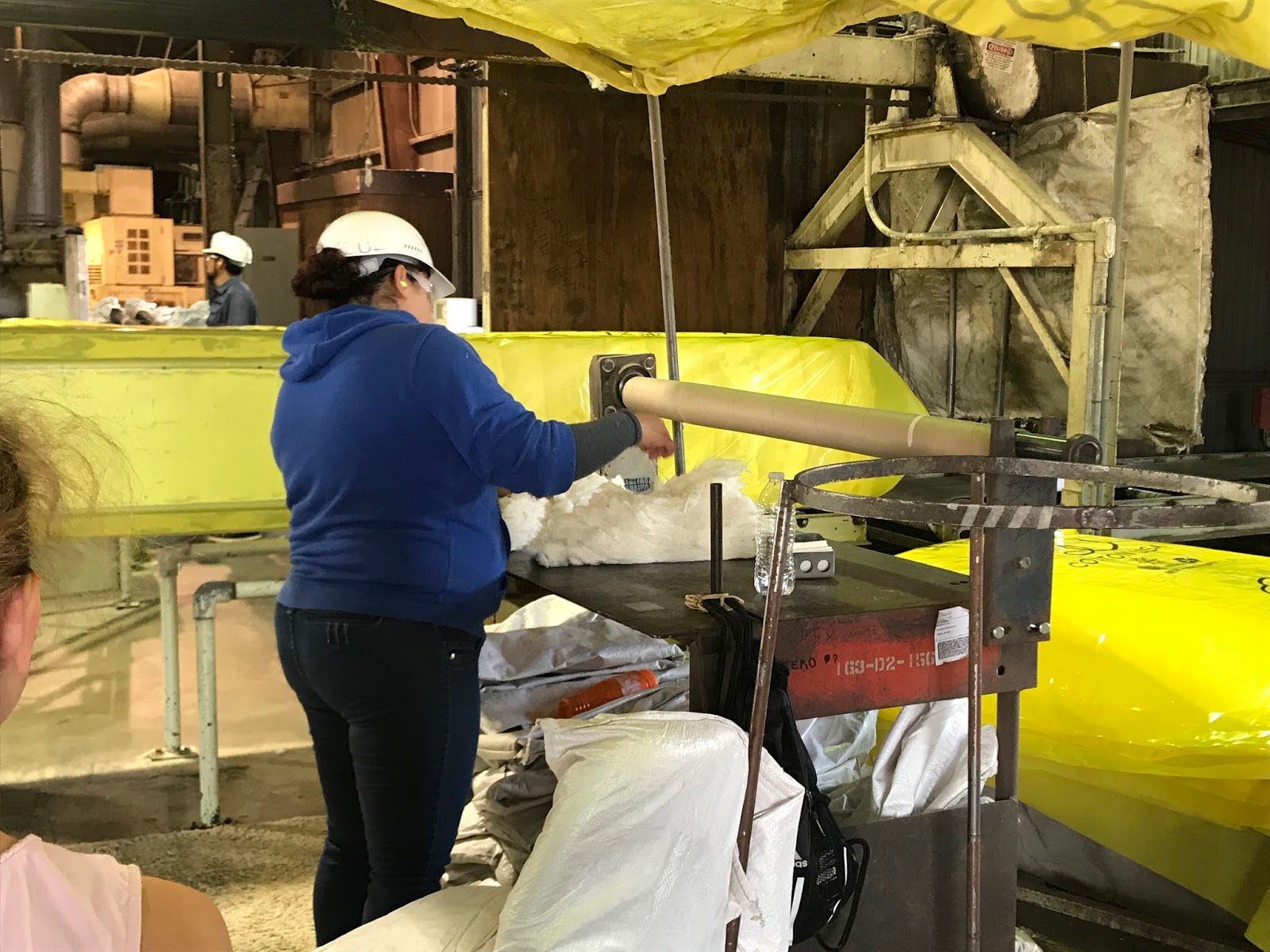

Samples are taken from each bale.  One goes to the government for inspection, grading and pricing, the other back to the grower for his records. The yellow bag is sealed and loaded onto trucks for shipment.  Most of the cotton we grow here in Central CA is grown for the seeds.  The seeds are sent to other states for their crops, as well as kept for replanting for our farmers.  The cotton is exported all around the world, especially to Asia, for use in textile production. 


Here are all the parents and kids who participated in this tour.  This giant pile of seed was not of good enough quality to plant, so it becomes cow feed. Other discarded seeds may be sent to be pressed for cottonseed oil. 


After the pictures, the kids were allowed to conquer Cotton Everest. 


Such a fun trip!  

If you want to learn more about cotton, may I suggest a few books?  


To contrast cotton and wool in textile production: Charlie Needs a Cloak

And for moms who might want to try their hand at spinning: 


Sunday, November 6, 2016

All Through The Ages


Can I share one of my favorite resources with you? It's Christine Miller's outstanding work: 
"All Through the Ages".  


What a work it is!  All the living book titles you could ever want, organized in several different ways: all of them by grade level (1-3, 4-6, 7-9 and 10-12), and in chronological order and geographical history.  The histories of Science, Mathematics, Visual Arts, Music, Western Civilization and the Christian Tradition are also included.  


Planning units or read alongs is SO easy with this resource!  I wish I had found it earlier in my homeschooling career.  Please do yourself a favor and buy this book. It's one resource I think *every* homeschooling family should have on their shelves.   


Tuesday, August 2, 2016

Reverse Engineering

My youngest son is all about engineering right now.  He wants to know how things work and why they work that way. He wants to be an inventor. He is a master of Lego and Minecraft.  To help him develop this interest, we are doing a course in "Reverse Engineering".  Each week I stop by a local thrift stores.  While there, I scour the shelves for mechanical items. 


He has a nice toolbox with a selection of tools already, so he just need the things to take apart.  The first thing he "Reverse Engineered" was an electric can opener. He took it apart as far as he could, then reassembled it and it did still work!  Then he took it apart and kept pieces like the cord and motor, screws and a few other parts.  He plans to eventually build something from all the useful parts he scavenges from these sacrificial projects. 


Lego is perfect for future engineers and their siblings. We spend was much time as possible with them. 


Reverse Engineering is even better when friends are visiting!  Here they are dissecting a food scale. Lots of learning happening and LOTS of fun!  I have a toaster ready for the next session and have my eye out for a rotary phone. I am also watching for a weed whacker or a lawn mower for small engine repair practice.  Next year, I hope he's ready for appliances! 

Practical skills are SO important in todays world! Seeing how things work is an integral part of practicality.  

Other resources:

The Way Things Work Now (on our wishlist)
How It's Made (I can't recommend this series highly enough!)
Friedhoffer books (this one and others!) 
Engineering for Kids (I haven't used this yet, but we will watch this series this school year.)
Lego Technic (We watch for clearance sales and have even found some in garage sales!)
Lego Mindstorms (if I was rich! LOL)

Friday, November 15, 2013

Incredible Crafty Paper

How's this for a handicraft?  This entire video, sounds and all, was created with paper.  What incredible creations could your children dream up with paper today?  Inspire them!


The Human Body (stop-motion!) from kellianderson on Vimeo.

For those less interested in innards and guts, perhaps quilling would be more to their liking?


Don't think that simple paper and glue isn't enough to capture your child's imagination on a rainy winter afternoon.  Get crafting!

Tuesday, August 27, 2013

Two Weeks of Unusual Animals Mini-Units

It's school time again!  Hooray!  My younger set (grades 3-5th) expressed interest in unusual animals the other day, so I made a bit of an overview study for them to enjoy the first two weeks of school.  We are doing Chemistry/Physics this year as our main science focus, but I don't want nature study to take a backseat. There will be a few of these types of studies thrown in throughout the year. These are short little studies, perfect to do in those short bits of free time in between other activities.

Two Weeks of Unusual Animals

Sloth

Sloth Facts
Bathtime for Baby Sloths
Mouldy, Buggy Sloth
Sloth Coloring Page


Aye-Aye

Aye-Aye Fact Video
Aye-Aye Coloring Page
Aye-Aye Facts


Blobfish

There's very few authentic pictures of blobfish.  Here they are in an album.  Click the right side of the picture to move to the next one. I couldn't find an authentic video clip of a blobfish in it's habitat.
Blobfish facts


Platypus

Platypus facts
Platytpus video clip
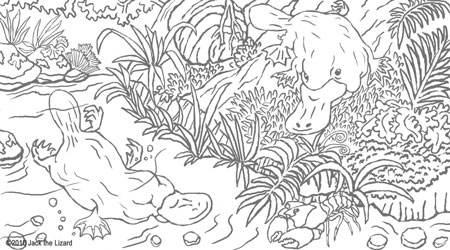
Platypus coloring page
Platypus (Step Into Reading)
Kindle book with over 50 pictures: (free at time of posting)

Echidna

Echidna video clip
Echidna facts
Echidna Coloring Page


Yeti Crab

The Discovery of the Yeti Crab
Yeti Crab facts
Yeti Crab Swarms
Yeti Crab Snack
Scientific paper of Yeti Crabs, with detailed outline drawings


Capybara

Pictures and facts about capybara
Capybara coloring page
Capyboppy


Sea Spiders

Sea Spider facts
Sea Spider Coloring Page (make the picture larger scale before printing)
Sea Spider video clip


Sea Pig

Sea Pig Facts
Sea Pig video clip (note that it is sped up 10X!)


Wednesday, March 13, 2013

Self-Motivated Desert Learning


If allowed, learning happens so naturally. My nearly eight year old Troubles is suddenly enamored with all things desert. If I had planned lessons on my timetable, they may or may not have produced some knowledge about the topic, but since it is self-motivated learning, it's ALL absorbed with enthusiasm!  He expressed interest in deserts last summer and we read a few books about them.  It's interesting how curiosity goes round and round.  


Some resources from this study:

Books:

You Tube:


Saturday, October 6, 2012

Buggy For Bugs


If your kids are anything like mine, they are love the four-footed furry animals, but they are also always bringing in new six and eight-legged friends.  We've been a host family to grasshoppers, locusts, an injured honeybee, praying mantises, a potato bug, a sun scorpion and many other buggidies.

I use a couple of different sites to identify new insects and spiders that we see.  The first I found was What's That Bug.  We found this one when we captured a sun scorpion and had no idea what in the world it could be.  We love the Bug-of-the-Month feature.

What's That Bug led me to BugGuide. Now I usually use BugGuide first, since they have a nice thumbnail feature that makes searching easier than by name only.

I'll often bring up one or the other site and let an interested child have some bonus computer time browsing around.  Yep, it's science!


Saturday, July 21, 2012

Summer Nature Study in the Sequoias

We went camping last week in the beautiful Sequoia mountains. I love it up there! I spent a wonderful hour or so with Missy and Troubles, doing an impromptu nature study. We walked down a hill from our campsite and began looking...really looking at our surroundings.  We turned over rocks to see what may be living under them, we examined tree bark, we spied all that we could.  Here are some of our finds:

This is an ant nursery that was under a rock.  The white things are the larvae.

There was a lot of this around.  I thought it would be easy to identify, but alas, I can not find a picture that looks like it.  Any guesses?

Here's a centipede we found under a rock.  We also saw (and captured in a cup for a time) a large millipede.  Always be careful with both, since they can bite and are venomous. 

We think these might be some kind of mushrooms.

This is a net-shaped web that Missy found.  Later, we found ones closer to the ground and observed the spiders living within.  They are large, about as big as your thumbnail, and brown and black in coloration. 

I haven't been able to identify this flower.  It was coming up out of the leaf litter and bees were pollinating it and drinking nectar. It had no apparent smell to us and no green leaves.  It measured only about 5-6 inches across all of the clumps. Anyone know what it is? Please leave a comment!

Nearby, we found this.  At first we thought it was scat, despite its bright coloring.  After researching, I think it may be Vomit Slime Mold.  What a crazy thing!  

These caterpillars dive-bomb right out of the trees.  The children liked their 'horns' and tail.  

We found this weathered stump with clear rings.  Counting carefully, we got to 40 before we reached the middle and they became too small to discern. 

I took this one to show how small the stump actually was.  Think how long it takes a tree like this to reach maturity!  

The Columbines were blooming and beautiful!

The next day, our family took the beautiful, two mile hike to the Adam and Eve Trees near Shake Camp Campground. 

Here are lots of Columbine near the trailhead.

Manzanita was plentiful along the trail. 

A majestic Sequoia

You really should put visiting here high on your list of things to do before the Lord calls you home. It's simply magnificent!  

Sunday, January 22, 2012

Animal Tracks and Wildlife Signs Science Unit-Part Two


We have been using Crinkleroot's Animal Tracks and Wildlife Signs as a science spine for the Littles for the past few weeks.  I blogged about the first part of the book here.  We're finally done so the book can be returned to the library. I really do need to invest in them for our own shelves.  Here's the remaining activities:

We met Owl next.  As I began reading about Owl, I asked each child what they already knew about owls.  I was pleased that they knew so much already!  They learned nothing new from this section, but did enjoy doing a virtual owl pellet dissection.  If I had planned ahead, I would have ordered a pellet kit.  They are inexpensive and a fun, hands-on activity that they would have enjoyed.  We did an owl coloring page and talked about owl characters in books we've read.  There are many!

We read about Snowshoe Rabbit and Bobcat on the same day, since they are a common prey/predator pair.  The Lambies enjoyed learning about the way the Lord camouflages the hare during the different seasons.  They were also amazed at the size of his feet!  I used this amazing video (even though it has a lynx rather than a bobcat) to show how agile he can be.  Be sure to preview this one if you have sensitive littles.

We watched several videos of bobcats winning the race and enjoying their meal afterward.  We also enjoyed the "Bobcat Kittens" videos.  This is the coloring page we used.  We discussed how wild animals are not pets, of course, and how, now matter how very cute they are, we mustn't touch any wild animal we may see in the forest. I have at least one child who wants to be a wildlife rehabilitator when they grow up.

We live close enough to take a trip to CatHaven and I plan to take all the children there this spring or summer. They even have a 'Track and Trail' class they can take!

Red Fox came next.  We have some foxes around here and saw one once, running across the road.  None of the Littles remembered it, though.  We watched a video or three and looked at this page.  We're not in Virginia, but I appreciated the big pictures and simple summaries. Note, too, the links at the bottom to useful videos and a coloring page.  (Can you NOT mention Redd Foxx during this lesson?)

Last but not least was the Grouse.  What a pretty bird!  We used this site to learn a bit more about this handsome fellow.  There are tabs for additional info, including the interesting sounds a male makes with his wings and a video, too. I printed off this coloring page.

So, that's all for this Crinkleroot book.  I let the children color a picture of Crinkleroot himself, too, so they could remember this fun unit and all we did.  I hope you find it in your library and share it with your children, too!

Wednesday, January 4, 2012

Animal Tracks and Wildlife Signs Science Unit

I've been using this Crinkleroot book for science for the Littles.  We love Crinkleroot!


The first animal mentioned is Beaver.  We read the section here, then went through Getting To Know Nature's Children: Beavers.  We did a coloring page and watched some videos on YouTube.

Otters are next.  The kids had fun sliding down the back of the bathtub like an otter slides down a muddy bank.  I showed them pictures we had taken when we saw the otter exhibit at Monterey Bay Aquarium a few years back.  Of course we also watched some videos, including the MBA Otter-Cam and colored a page.

Raccoon is the next one we met.  In addition to videos, we did a coloring page and read Jim Arnosky's Raccoons and Ripe Corn.  We discussed why raccoons are considered pests in some places and how dexterous they are.  We looked at the anatomy of their hands and how they have functional (but not opposable) thumbs.  I taped down the children's thumbs to show them how hard life would be without thumbs!

I found a great video showing Beaver and Otter together during wintertime.  I now can ask a Little is he or she is acting like Beaver or Otter and they will have a character trait to identify.


Whitetail Deer was next.  We saw a doe and her two fawns last summer when we were camping and the children have a great memory of it.  We learned about how bucks grow their antlers and why.  We learned how they shed them every year.  The Lambies spoke of trying to find some next time we are in the forest before the mice nibble them away.  I let them feel some faux-velvet so they knew the texture of the velvet on the antlers as they grow. We read Deer At The Brook and watched a clip or two of the graceful creatures.

I'll continue blogging our activities for the second part of the book when we are finished with them!

Thursday, December 29, 2011

Nice How That Happens


We're back to school after a two week break for Christmas.  I love how things are coming together, too.  The Littles are enjoying a science book called "Crinkleroot's Book of Animal Tracks and Wildlife Signs". One of the first animals mentioned are beavers.  We are reading a beaver book to get to know more about them before moving on to Crinkleroot's next friend. We're also beginning our geography study on Oregon, which is known as The Beaver State.  Happily, when choosing a book to read for history, Trouble and Anna picked out "Roughing It on the Oregon Trail", not knowing what our geography study would be!  I'll probably write out a Beaver Mini-Unit with links even though we aren't really doing a mini-unit this time.

Friday, September 23, 2011

Anatomy Dude


I've written before about how much Troubles likes anatomy. He's enjoying sitting in on Exploring Creation with Anatomy with the bigger kids. He's not required to do anything he doesn't want to, but he's listened to most of the lessons and participated in several of the "Try This's" and experiments. Today we got out Anatomy Dude to examine his muscles. Guess who has been playing Dr. Frankenstein all day?

I showed Jack and Troubles an Amazon page of anatomy models. Oh, how they want everything, especially the Anatomy Dude's Head, Skull, Heart and Hand! Maybe "Santa" will be bringing human models for Christmas!!

Friday, August 19, 2011

Black Bear Mini-Unit

http://www.outdoor.com/wp-content/uploads/2008/04/378px-black_bear_large.jpg

Our school year has officially started! For my Littles (ages 9,9 and 6) we are beginning the year with a bear study. We're focusing on black bears, since they are our 'local' bear, with a sprinkling of grizzly, sun, koala, polar and panda for good measure. We had the good fortune of having a personal encounter with a black bear a few years ago while camping. The children were eating s'mores around the campfire in the afternoon. A bear came wandering near our camp, so my Honey, my SIL and I stood between the bear and the kids and watched him walk past. The children could see him well and they all, except Troubles, remember the experience.

https://blogger.googleusercontent.com/img/b/R29vZ2xl/AVvXsEgU3m0aR_jVYerx0vRWiZ0aM78Bu0CZR1PgrFaJSU-hbV1__bhOLPHgOUKdBLMtUYLSvD6inALbC7FdE1GZd3HjlR_EHn8r0lZ4WPxGUNzr83idzmkvlE8HtSaFEGPNvtGmnwXcxm61ahqs/s400/TheThreeBearsGaldone.jpg

For our study we read some books:

Bears for Kids by Jeff Fair
Black Bear Baby by Alan Lind
The Three Bears by Paul Galdone
Bearskin by Howard Pyle
Blueberries for Sal by Robert McCloskey (This was made even more relevant by a recent gift to our family of pounds of blueberries from a friends bush.)
Little Bear (and the others in the series) by Elsa Holmelund Minarik
Jessie Bear stories by Nancy Carlstrom

If we want to spend more time with bear characters, we'll read some Paddington. We read both Winnie the Pooh and The House at Pooh's Corner last year. I have all my early readers read "The Bears on Hemlock Mountain", so I did not read it with them now.

We did not, please note, read any Berenstein Bears. I do not like them. Father Bear is portrayed as an idiot and he is looked at with scorn by Mother and the children. I won't have those disrespectful storylines in the house.

We watched some videos:

Baby Bear Squeaks
Lost Baby Bear Calls For Momma
Grizzly Roars
Sleepy Baby Bear

We used some other sites, too.

Here's a bear den webcam that we have kept an eye on.

Of course we discussed bear safety. This is old hat to my Lambies since we camp in bear country often.

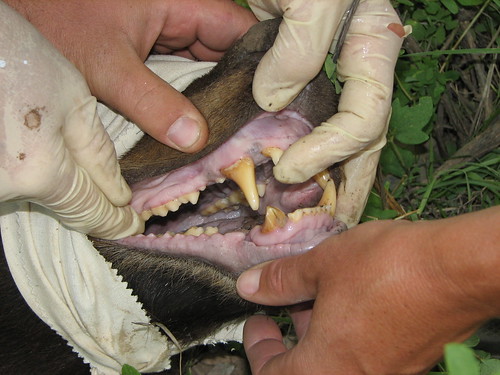
We have seen a replica black bear paw, real teeth and even skulls several times in the ranger station that we visit when we go camping. I'd love to see a model of a black vs grizzly paw in real life. This would make a real impression!

https://blogger.googleusercontent.com/img/b/R29vZ2xl/AVvXsEipqkqZSmkX6INYlT27oFqJPk0XA6qUPaT4BMoMCYl01OtGyOkkI5JeDes1jgGEnwCxITfuzHVVrrY9mX3qmYb5i3npr42k4nS6UlfcyiG9GktuKD7mPjrHCXXx-c4Y1j8f_z1tTi6pc1Q/
(awesome picture from CoolRVers)

I created a pretty easy bear word search for them using this tool.

They did a coloring page or two.

Since bears love honey and seeds, we made these Sesame Honey Candies. We did not sprinkle them with ants or grubs to make them even more like a bears natural diet.

http://images.nationalgeographic.com/wpf/media-live/photos/000/002/cache/black-bear_233_600x450.jpg


Tuesday, July 5, 2011

Tide Pool Study

We went to the Oregon coast and were blessed to be able to see some tide pools. While walking to them, the Lambies collected random crab parts. Later, they assembled the fine specimen you see above.


Many of the children spent the 2010-2011 school year in "Exploring Creation with Zoology 2: Swimming Creatures". Therefore, these animals were familiar and they had *that* much more fun seeing what they had studied.

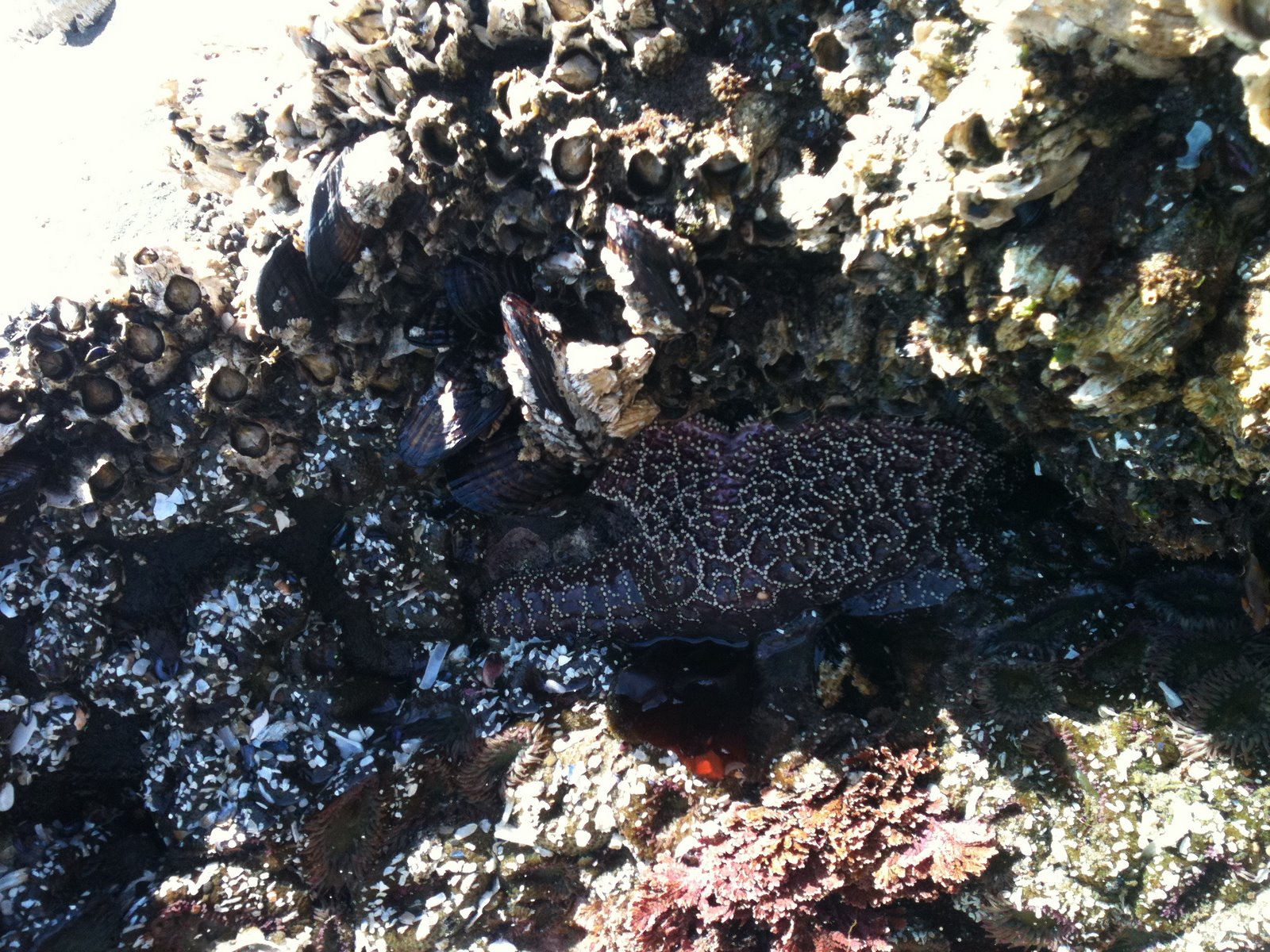
Someone else pried this starfish off of his shelf and left him out on the rocks, upside down and vulnerable. We held him for a little while, noticing his rays, suckers, eyespots and mouth. Then we returned him to a pool, in a safe location.


There were SO many mussels! We recalled reading in "Pagoo" that they sent out strings to anchor themselves. Looking carefully, we did indeed see byssal threads! We also identified several kinds of seaweed and sea grass. We had a great time, learning and playing in God's great creation!